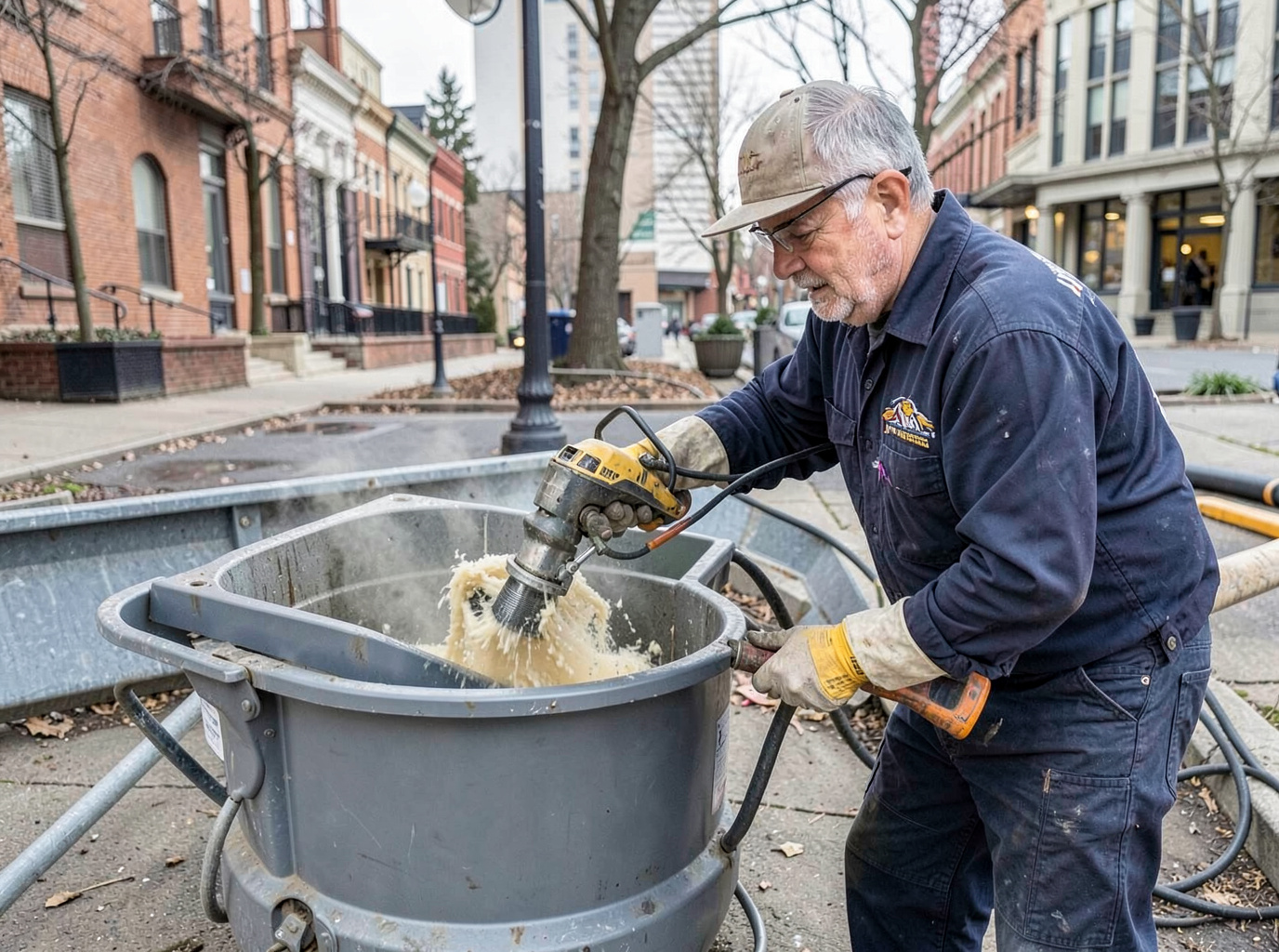
Portland's older housing stock in Munjoy Hill, the East End, and Downtown often features narrow cast-iron lines that trap fats, oils, and grease more readily than newer builds in South Portland or Westbrook. Cold snowy winters cause these materials to solidify faster inside traps, turning routine maintenance into urgent calls when lines back up into kitchens or basements. We pump and scrape traps on site, then haul waste to approved Cumberland County disposal points rather than risking illegal dumping that draws city fines.
Commercial kitchens along Commercial Street and in the West End see heavier daily loads from fryers and grills, so their interceptors require quarterly attention to stay under Portland's FOG discharge rules. Residential properties in Parkside and Deering sometimes share older sewer laterals that run close to Casco Bay's tidal influence, making any grease overflow a faster path to street flooding during spring thaws. We always check the trap's outlet tee and flow control device during service because a single cracked baffle can let grease pass straight into the main line.
Terrain around the Eastern Promenade and Portland Observatory slopes create low spots where grease settles and hardens during mild summers before winter locks it in place. Skipping regular cleaning here often leads to the trap overflowing into floor drains rather than the city sewer, especially after heavy rain. Our crews carry jetting equipment sized for these tight alleys and one-way streets so we can clear the line without tearing up historic brick sidewalks.
Seasonal Guidance
Winter calls in Portland spike once temperatures drop below freezing because grease that stayed liquid in mild summers now cakes on trap walls. We schedule extra visits for Old Port restaurants before the first snow so lines stay clear when plows push slush into catch basins that feed the same system.
Technician insight
In Portland the thing that catches most people out with grease trap cleaning is how fast the material sets once winter hits. A trap that looked fine in October can be half-solid by January in an unheated basement on Munjoy Hill because the cast-iron lines stay cold and the grease never gets a chance to flow out.
East End restaurant backup
A kitchen on the East End called after a fryer line backed up into the floor drain during a lunch rush. We found the trap nearly full because the previous service had missed the outlet baffle. After pumping and scraping we jetted the short run to the main and the line stayed clear through the rest of the snowy season.
Grease Trap Cleaning Services We Offer
✓Restaurant Grease Trap Pumping
Remove accumulated FOG from under-counter and in-floor traps at Portland eateries before it hardens in cold weather and blocks lines to the main sewer.
✓Commercial Kitchen Interceptor Cleaning
Full pump-out and scraping of larger exterior interceptors serving kitchens in Downtown and the West End where daily volume is high.
✓Residential Grease Trap Service
Clean and inspect smaller traps in single-family homes and multi-unit buildings in Munjoy Hill and Parkside where older plumbing meets modern cooking habits.
✓Emergency Grease Trap Response
Same-day pumping and line jetting when a trap overflows into a kitchen or basement during a weekend rush in the Old Port or East End.
✓FOG Line Jetting
High-pressure clearing of downstream lines after trap service to push any remaining grease through to the city main before it sets in winter temperatures.
✓Trap Inspection and Baffle Check
Visual and flow test of the outlet device and baffles to catch cracks before they let grease into Cumberland County sewers.
Grease Trap Cleaning Cost in ME
| Service | Typical Range | What Affects It |
|---|---|---|
| Standard under-counter trap pump-out | $175–$325 | Size and location in older Downtown buildings often add time. |
| Exterior interceptor cleaning | $350–$650 | Larger volume at restaurants near Casco Bay increases disposal fees. |
| Emergency or after-hours service | $400–$750 | Weekend or evening calls in Munjoy Hill or the East End. |
| Line jetting add-on | $150–$300 | Required when grease has already moved past the trap in cold weather. |
Ranges are typical for ME and confirmed with an exact written quote before any work starts.
How it works
- 1
Site Assessment
We locate the trap, measure access, and note any nearby landmarks or tight alleys that affect equipment placement in neighborhoods like the Old Port.
- 2
Pumping and Removal
Liquid and solids are pumped into our truck using hoses sized for Portland's narrow streets, then transported to approved disposal.
- 3
Interior Cleaning
Walls, baffles, and outlet tees are scraped and rinsed so no residue remains to seed new buildup during cold snaps.
- 4
Final Inspection
We verify flow, photograph the clean trap, and note any needed repairs before leaving the property.
Pricing
Most Portland grease trap jobs fall into these ranges depending on trap size, access, and how much material has built up after winter.